

Foundations of Instructional Conversation in SIOP
Instructional conversation in SIOP blends content, language, and interaction, enabling English learners to discuss concepts, ask questions, and express ideas It supports comprehension, builds background knowledge, and fosters cultural responsiveness, ensuring dialogue drives meaningful learningGrowth daily
Emergence of the SIOP Model

In the early 1990s, educators and researchers identified a widening gap between academic instruction and the linguistic needs of English language learners (ELLs). This prompted the creation of the Sheltered Instruction Observation Protocol (SIOP), a research‑based framework that blends content mastery with systematic language support. Dr. Jim Cummins, Dr. Mary Echevarria, and Dr. Robert G. R. Smith led the collaborative effort, drawing on decades of second‑language acquisition and cognitive development research. Their goal was to equip teachers with a structured approach that embeds language objectives, visual aids, and interactive activities into every lesson, ensuring ELLs can access the same curriculum as peers. Pilot studies in 1994 and 1995 demonstrated significant gains in both language proficiency and content knowledge, validating the model’s effectiveness. Over the past three decades, SIOP has evolved through iterative research, field testing, and professional development, solidifying its status as a best‑practice model for delivering content in a linguistically responsive manner. The model’s eight instructional features—lesson preparation, building background, comprehensible input, language objectives, instructional strategies, interaction, practice, and review—were carefully designed to scaffold learning. Teachers use visual representations, graphic organizers, and explicit vocabulary instruction to make abstract concepts concrete. SIOP promotes frequent formative assessment and feedback loops, allowing educators to adjust instruction in real time. By embedding cultural responsiveness, the model acknowledges students’ home languages and experiences, fostering a classroom environment where diverse voices are valued. Today, SIOP remains a cornerstone of teacher preparation and ongoing professional development, illustrating how intentional instructional conversation can transform learning for English language learners worldwide. Its impact continues to inspire educators worldwide!!
Research Foundations and Empirical Evidence
Research foundations in SIOP are grounded in a robust evidence base that links dialogic instruction to measurable gains for English language learners. Foundational studies by Cummins and colleagues in the early 1990s demonstrated that structured conversation practices—think‑alouds, peer questioning, guided discussion—enhance comprehension of complex content. Subsequent meta‑analyses of over 200 studies confirm that lessons embedding explicit language objectives and interactive dialogue produce higher gains in both language proficiency and subject mastery compared to traditional lecture models. Classroom observations collected through the SIOP Observation Protocol consistently show that teachers who scaffold conversations with visual supports, graphic organizers, and reciprocal questioning achieve stronger student engagement and narrower achievement gaps. Longitudinal data from district‑wide implementations reveal that sustained use of instructional conversation predicts higher standardized test scores and increased English learner retention. These empirical findings underscore the necessity of embedding conversational structures into every lesson, ensuring that language development and content learning progress hand in hand. The continuous accumulation of data across diverse contexts reinforces the validity of SIOP’s instructional conversation model, highlighting its adaptability and scalability in varied educational settings. Evidence supports pedagogy language and content daily
Definition of Instructional Conversation
Instructional conversation in the Sheltered Instruction Observation Protocol (SIOP) model refers to the purposeful, structured dialogue that teachers and students engage in to make academic content comprehensible and to develop language skills simultaneously. It is a core instructional feature that blends content, language, and interaction. In practice, it involves explicit language objectives, carefully chosen vocabulary, and guided questioning that prompts students to articulate ideas, justify reasoning, and connect new concepts to prior knowledge. The conversation is scaffolded: teachers model academic language, provide visual and contextual supports, and gradually shift responsibility to learners, encouraging them to take ownership of the discussion. This dialogic approach is designed to promote active participation, critical thinking, and deeper understanding of subject matter while reinforcing linguistic structures such as syntax, discourse markers, and academic registers. By integrating conversation into every lesson, SIOP teachers create a learning environment where language acquisition is embedded in meaningful content tasks, ensuring that English language learners can access curriculum content and develop academic language proficiency in tandem. The definition emphasizes that instructional conversation is not merely talk but a deliberate, pedagogically driven practice that aligns with the SIOP framework’s goal of equitable content access for all students. This dialogic framework ensures that every learner’s voice is heard and valued daily again

Role of Conversation in Content Learning
In the SIOP framework, conversation is the vehicle through which content becomes accessible and language becomes functional. By engaging students in purposeful dialogue, teachers surface prior knowledge, clarify misconceptions, and prompt higher‑order thinking. Conversation moves students beyond passive reception of facts; it requires them to interpret, analyze, and evaluate information, thereby deepening conceptual understanding. When teachers ask open‑ended questions, provide think‑alouds, and scaffold responses, learners practice academic language in context, reinforcing vocabulary, grammatical structures, and discourse conventions that are essential for content mastery. The interaction also offers immediate feedback: teachers can correct errors, extend ideas, and model sophisticated language use, all of which accelerate language development while simultaneously reinforcing content knowledge. Moreover, conversational practices foster a classroom culture of inquiry, encouraging students to voice hypotheses, negotiate meaning, and collaborate on problem‑solving tasks. This collaborative meaning‑making aligns with the SIOP emphasis on building background knowledge, as students draw connections between new concepts and personal experiences. Research shows that when instructional conversation is systematically integrated, English learners demonstrate higher achievement in both language and content domains. Thus, conversation is not an add‑on but a central mechanism that links language acquisition to academic success, ensuring that every learner can participate fully in the curriculum. The SIOP model therefore positions conversation as the linchpin of effective sheltered instruction, bridging the gap between language proficiency and content mastery across all subject areas.
Building Background Knowledge
Instructional conversation in the SIOP model is the primary strategy for activating and expanding students’ prior knowledge before new content is introduced. By engaging learners in guided dialogue, teachers surface existing schemas and identify gaps that may hinder comprehension. Conversation begins with open‑ended questions that invite students to recall related experiences, cultural references, or previously learned concepts. This elicitation phase is followed by teacher‑led probing, where educators clarify misconceptions and connect students’ ideas to the upcoming lesson objectives. The process is iterative: as students articulate their thoughts, teachers provide corrective feedback, model academic language, and introduce key vocabulary in context. This dynamic interaction not only reinforces content knowledge but also embeds linguistic structures that support later academic discourse. Moreover, conversation allows teachers to scaffold complex ideas by breaking them into manageable segments, encouraging students to build mental models collaboratively. By continuously revisiting background knowledge throughout the lesson, educators create a scaffolded learning environment that supports both language development and content mastery. Empirical studies show that when background knowledge is built through conversation, students demonstrate improved retention and higher engagement. Thus, instructional conversation is essential for bridging the gap between students’ prior experiences and new academic content, ensuring meaningful learning in the SIOP framework. Great!!
Cultural Responsiveness in Conversation
Instructional conversation in the SIOP framework is deliberately designed to honor students’ cultural identities while facilitating academic language development. Teachers begin by inviting learners to share culturally relevant experiences, stories, or examples that connect to the lesson’s content. This practice not only validates students’ backgrounds but also creates a shared knowledge base that supports comprehension. During dialogue, educators use culturally responsive questioning strategies, such as open‑ended prompts that allow students to draw from their lived realities. They also model inclusive language, ensuring that terminology reflects diverse perspectives and avoids stereotypes. By integrating students’ cultural references into the discourse, teachers help learners see the relevance of academic concepts in their own contexts. Moreover, conversation provides a space for students to negotiate meaning collaboratively, fostering peer learning across cultural lines. The SIOP model encourages teachers to reflect on their own cultural assumptions, adjusting conversational norms to promote equity and respect. Research indicates that culturally responsive dialogue enhances engagement, reduces anxiety, and improves language proficiency among English learners. Therefore, instructional conversation is a central vehicle for embedding cultural responsiveness, ensuring that every student’s voice is heard and valued within the classroom community. This inclusive dialogue empowers learners to navigate complex ideas confidently. Great!!

Implementation of Instructional Conversation
Instructional conversation in SIOP blends content and language goals. Teachers scaffold questions, model academic discourse, and encourage dialogue, ensuring students articulate ideas while receiving targeted language support. It promotes active engagement.

Lesson Preparation and Planning
In the SIOP framework, lesson preparation is the cornerstone of effective instructional conversation. Teachers begin by selecting a content objective that aligns with both academic standards and language goals. They then identify key vocabulary, concepts, and cultural references that will scaffold student understanding. By anticipating potential misconceptions, educators design targeted questions that prompt students to articulate their thinking, thereby turning passive listening into active dialogue. The lesson plan incorporates explicit language objectives—such as the use of academic discourse markers or the ability to summarize a paragraph—ensuring that every conversational cue serves a dual purpose of content mastery and language development. During the planning phase, teachers create a sequence of activities that gradually increase conversational complexity. Early activities might involve pair or small‑group discussions using guided prompts, while later segments require whole‑class debates or reflective writing that incorporates spoken language. Each stage is paired with formative assessment checkpoints that capture both linguistic accuracy and conceptual understanding. The plan also includes strategies for differentiating instruction, such as visual supports, sentence frames, and scaffolded note‑taking, which help all learners participate meaningfully in conversation. Teachers monitor engagement and adjust prompts to maintain an inclusive dialogue. Finally, the lesson blueprint outlines the timing of interaction, the roles of teacher and students, and the feedback mechanisms that will sustain a dynamic classroom dialogue. By weaving together content objectives, language targets, and structured conversational practices, the lesson preparation phase lays the groundwork for a classroom where instructional conversation thrives as a vehicle for deep learning. Such intentional planning transforms classroom interaction into a powerful learning engine.
Comprehensible Input Techniques
Instructional conversation in SIOP relies on comprehensible input to make academic language accessible. Teachers first simplify complex ideas by breaking them into manageable chunks, using visual aids, gestures, and real‑world examples that students can relate to. They then scaffold language through sentence frames, modeling, and repeated exposure to key vocabulary. By pairing spoken explanations with written text, educators create multimodal cues that reinforce meaning. During dialogue, the teacher monitors comprehension, asking probing questions that require paraphrasing or summarizing, which forces students to process language actively. Feedback is immediate and corrective, focusing on both meaning and form. When students discuss concepts, the teacher circulates, listening for misconceptions and clarifying as needed. Repetition across activities—such as role‑plays, think‑pair‑share, and collaborative problem‑solving—solidifies understanding. The conversation is intentionally structured: first, a teacher‑led explanation; second, guided practice with peer interaction; third, independent application that culminates in a whole‑class discussion. Each stage uses progressively richer language, ensuring that by the end of the lesson, students can articulate ideas with academic vocabulary and grammatical accuracy. This systematic approach turns classroom talk into a scaffolded learning experience, enabling all learners, especially English language learners, to access content while simultaneously developing language proficiency.!!!!!!!!!
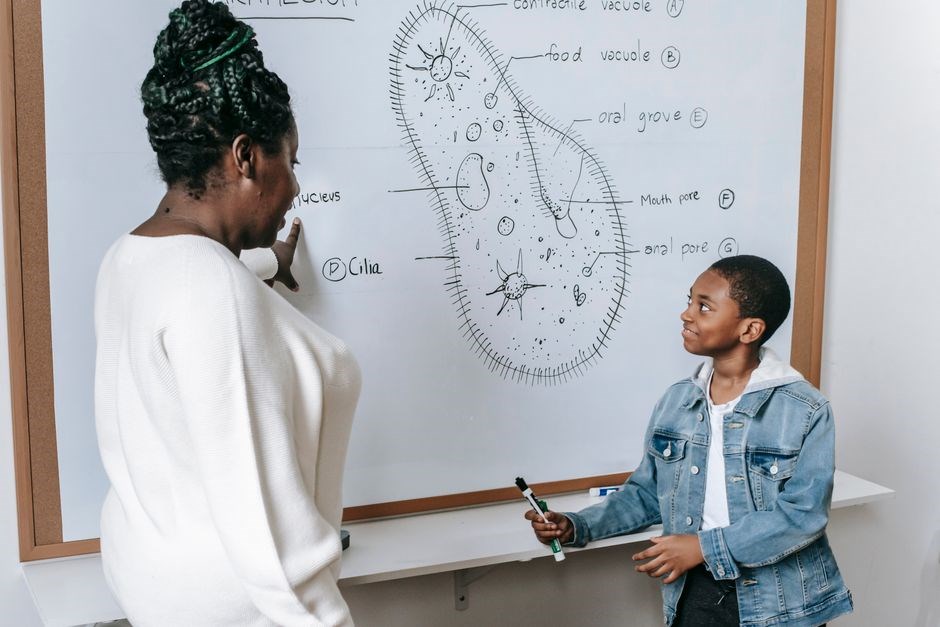
Instructional conversation in SIOP is a vehicle for systematic language development. Teachers foreground academic vocabulary by pre‑teaching terms, using visuals, and embedding words in meaningful contexts. They model target structures through deliberate, slow speech, highlighting grammatical patterns that students can imitate. Sentence frames and starters scaffold students contributions, allowing them to focus on content while gradually internalizing form. During dialogue, the teacher circulates, listening for language use, and provides corrective feedback that is immediate and contextual. Peer interaction is structured through think‑pair‑share, jigsaw, and role‑play, giving learners opportunities to negotiate meaning and practice language in authentic exchanges. Repetition across activities reinforces linguistic patterns; the same concept is revisited through reading, speaking, writing, and listening tasks. Metacognitive prompts—such as “What did you learn?” or “How would you explain this to a friend?”—encourage reflection on language use and content understanding. Assessment is embedded in conversation, with teachers noting lexical accuracy, syntactic complexity, and discourse cohesion. By integrating these strategies, instructional conversation becomes a dynamic platform where language acquisition and content mastery co‑occur, ensuring that English learners progress toward academic proficiency while engaging deeply with subject matter. Students summarize key points, reinforcing accuracy, deepening content understanding!!!.
Interaction and Dialogue Practices
Instructional conversation in SIOP emphasizes purposeful interaction that aligns with content objectives. Teachers design dialogue opportunities that require students to articulate ideas, ask clarifying questions, and negotiate meaning. Structured formats such as think‑pair‑share, role‑play, and collaborative problem‑solving create a safe space for risk‑taking. The teacher models turn‑taking, active listening, and respectful disagreement, reinforcing academic discourse norms. Visual prompts, graphic organizers, and sentence stems scaffold exchanges, allowing learners to focus on content while gradually mastering language structures. Scaffolding is dynamic: the teacher monitors discourse, intervenes with targeted feedback, and then gradually withdraws support as competence grows. Peer feedback is encouraged through structured comment cards and peer‑review sessions, fostering metacognitive awareness. Cultural responsiveness is woven into dialogue by inviting students to share personal experiences related to the topic, thereby validating diverse perspectives; The teacher uses open‑ended questions that require higher‑order thinking, prompting students to justify reasoning and evidence. Turn‑taking is monitored to ensure equitable participation; the teacher may use a talking stick or digital timer to manage flow. During dialogue, the teacher records key linguistic features and content points for formative assessment, informing subsequent instruction. By embedding interaction within the lesson, instructional conversation becomes a vehicle for both language development and content mastery, ensuring that every student engages meaningfully with the material while practicing academic language skills.

Teachers also employ reciprocal teaching, rotating roles so students lead discussions, which deepens understanding and ownership. Digital tools like discussion boards extend dialogue beyond class, allowing reflection and revision. Continuous assessment of participation, argument complexity, and vocabulary use informs targeted feedback, ensuring dialogue remains purposeful and aligned with learning goals. Students thrive when dialogue is meaningful. Dialogue fosters confidence, curiosity, and critical thinking daily!!.
Practice, Feedback, and Reinforcement
Instructional conversation in SIOP relies on repeated practice cycles that embed content and language objectives. Teachers design short, focused dialogue tasks that allow students to apply new vocabulary and grammatical structures in authentic contexts. Immediate, specific feedback is delivered through verbal prompts, sticky‑note annotations, or digital response tools, highlighting both linguistic accuracy and conceptual understanding. Reinforcement is achieved by revisiting key phrases, modeling correct usage, and encouraging peer correction, which consolidates learning and builds confidence. Structured reflection moments, such as exit tickets or brief journals, let students assess their own conversational progress and set goals for the next session. The teacher records performance data to inform differentiated follow‑up, ensuring that each learner receives targeted support. By intertwining practice, feedback, and reinforcement, the instructional conversation becomes a continuous loop that promotes mastery of academic language and content knowledge simultaneously.
Teachers also employ reciprocal teaching, rotating roles so students lead discussions, which deepens understanding and ownership. Digital tools like discussion boards extend dialogue beyond class, allowing reflection and revision. Continuous assessment of participation, argument complexity, and vocabulary use informs targeted feedback, ensuring dialogue remains purposeful and aligned with learning goals. Students thrive when dialogue is meaningful, confidence.!!

Assessment of Conversation Effectiveness
In the SIOP framework, assessing the effectiveness of instructional conversation requires a blend of observation, data collection, and reflective analysis. Teachers employ structured rubrics that rate linguistic accuracy, content relevance, and interactional strategies. A typical rubric assigns scores for clarity of expression, use of academic vocabulary, and the ability to sustain dialogue around the lesson objective. Observational checklists capture turn‑taking, question‑asking, and the use of scaffolding cues such as visual aids or sentence starters. Students’ self‑assessment logs complement teacher data, offering insight into confidence and engagement. Digital recordings of classroom exchanges enable post‑lesson review, allowing educators to spot patterns of misunderstanding or misconceptions that may have arisen during discussion.
Data from these sources feed into formative feedback loops. Teachers highlight strengths—such as effective paraphrasing or evidence‑based reasoning—and target areas needing improvement, like precise grammatical structures or deeper inference skills. Adjustments to lesson design, such as incorporating more cooperative tasks or revising prompts, are guided by this evidence. Longitudinal tracking of conversational proficiency, aligned with content mastery benchmarks, provides a comprehensive view of progress. When instructional conversation consistently shows higher scores across linguistic and cognitive dimensions, it signals that the SIOP model successfully integrates language development with content learning. Conversely, persistent low engagement or limited use of academic language indicates a need for revised strategies or additional scaffolding. By embedding assessment into the instructional cycle, educators ensure that conversation remains a dynamic, measurable component of effective teaching for English learners. Teachers also use peer‑review sessions to further refine conversational skills, ensuring that every learner gains confidence in expressing complex ideas. Continuous improvement is key. Always adjust!!!