

Math Olympiads challenge students with complex problems, demanding innovative solutions; finding PDF resources with questions and solutions is crucial for effective preparation and skill development.
What is the International Mathematical Olympiad (IMO)?
The International Mathematical Olympiad (IMO) stands as the world’s most prestigious mathematics competition for high school students. Annually, it brings together exceptionally talented young mathematicians from over 100 countries to tackle incredibly challenging problems. These aren’t routine exercises; they demand deep understanding, creative thinking, and elegant problem-solving techniques.
The competition consists of six problems, split over two days of three problems each. Problems span various mathematical fields – algebra, number theory, geometry, and combinatorics – requiring a broad skillset. Success at the IMO isn’t just about knowing formulas; it’s about mathematical ingenuity. Accessing past IMO questions with solutions in PDF format is invaluable for aspiring participants, offering insight into the competition’s style and difficulty.
The Difficulty Level of IMO Problems
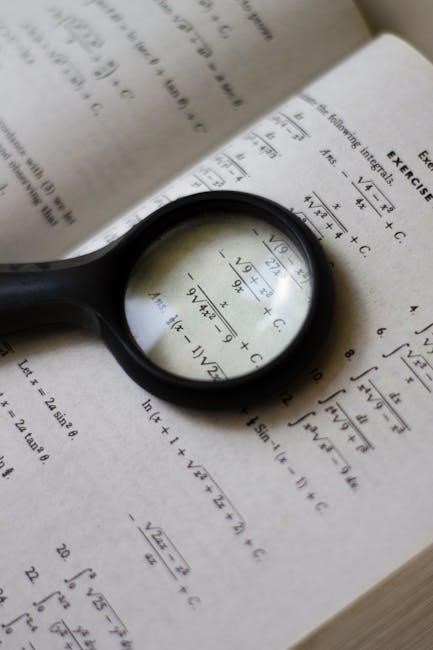
IMO problems are renowned for their exceptional difficulty, far exceeding the standard high school curriculum; They aren’t designed for quick recall but require substantial mathematical reasoning and proof construction. Often, problems demand multiple steps and a synthesis of different mathematical concepts. Even identifying the correct approach can be a significant hurdle.
The problems are crafted to be accessible to a select few, pushing the boundaries of mathematical thinking. Studying past IMO questions with solutions in PDF format reveals this complexity. Analyzing solved problems demonstrates the depth of thought required and exposes students to advanced techniques. These resources aren’t just about finding answers; they’re about understanding the process of tackling incredibly hard problems.
Why Practice with Past Papers?
Consistent practice with past Math Olympiad questions is paramount for success. Utilizing PDF resources containing these papers allows students to familiarize themselves with the problem styles, difficulty levels, and expected rigor. Repeated exposure builds crucial problem-solving skills and enhances mathematical intuition.
Furthermore, studying solutions – readily available in these PDF formats – isn’t merely about learning the answer. It’s about dissecting the reasoning, understanding alternative approaches, and identifying common pitfalls. This analytical process is vital for developing independent problem-solving capabilities. Access to solved papers provides a benchmark for self-assessment and highlights areas needing improvement, ultimately boosting confidence and performance.

Types of Math Olympiad Questions
Math Olympiads encompass diverse areas like geometry, number theory, algebra, and combinatorics; PDF resources categorize questions by type for focused practice and skill building.
Geometry Problems
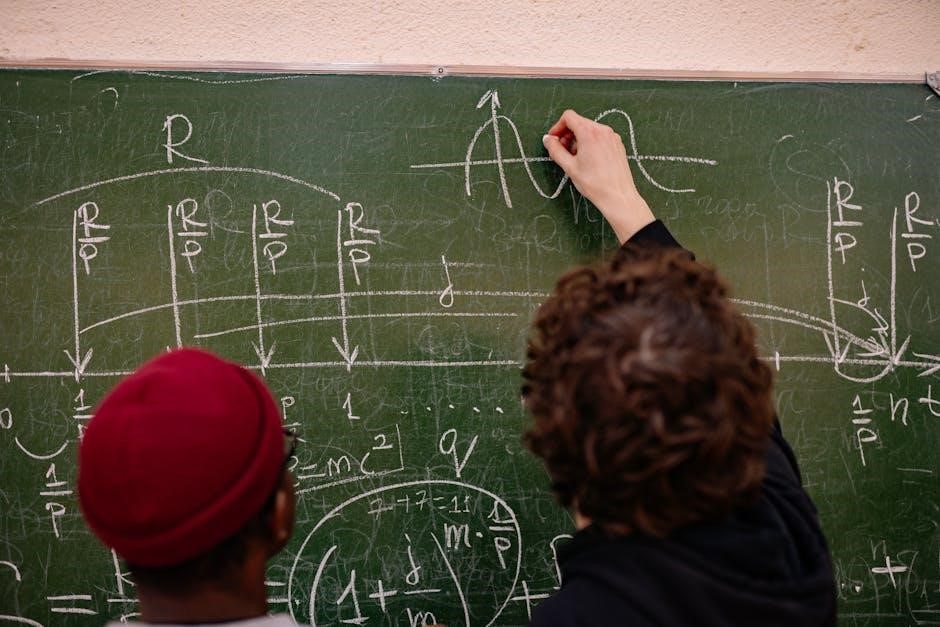
Geometry in Math Olympiads frequently tests spatial reasoning and proof-writing abilities. Problems often involve triangles, circles, and polygons, requiring application of theorems and constructions. Accessing PDF collections specifically focused on geometry is invaluable. These resources present challenging problems alongside detailed solutions, illustrating key techniques like angle chasing and utilizing circle theorems.
PDFs allow focused practice on areas like triangle inequality and its implications, building a strong foundation. Studying solved problems demonstrates how to approach unfamiliar geometric configurations. Furthermore, these resources often categorize problems by difficulty, enabling progressive learning. Mastering geometry demands visualizing shapes and understanding relationships, and PDFs provide ample opportunity for honing these skills.
Angle Chasing Techniques
Angle chasing is a powerful geometric technique central to solving many Olympiad problems. It involves systematically tracking angles within a diagram to deduce relationships and ultimately, solve for unknowns. PDF resources dedicated to Olympiad geometry often showcase numerous examples of angle chasing in action, with step-by-step solutions.
These PDFs demonstrate how to identify key angles, utilize supplementary and complementary angle properties, and apply trigonometric identities. Practicing with solved problems builds intuition for recognizing angle chasing opportunities. Effective PDFs will highlight common pitfalls and strategies for simplifying complex diagrams. Mastering this technique requires diligent practice and a keen eye for detail, making targeted PDF study essential.
Circle Theorems and Applications
Circle theorems are fundamental to geometry problems in Math Olympiads, frequently appearing in challenging scenarios. These theorems relate angles subtended by arcs, tangents, and chords within a circle, providing crucial tools for problem-solving. Comprehensive PDFs containing Olympiad questions often dedicate significant sections to circle geometry, illustrating various applications.
These PDF resources demonstrate how to apply theorems like the inscribed angle theorem, the tangent-chord theorem, and the alternate segment theorem. They showcase how to combine these theorems with other geometric principles to solve complex problems. Studying solved examples within these PDFs is vital for recognizing patterns and developing a strong understanding of circle geometry. Consistent practice with PDF-based problems builds proficiency.
Triangle Inequality and its Implications
The triangle inequality – stating the sum of any two sides of a triangle must exceed the third – is a cornerstone of geometry problems in Math Olympiads. PDFs dedicated to Olympiad preparation consistently feature problems testing this principle, often in disguised forms requiring clever application. Understanding its implications extends beyond basic side length comparisons.
These PDF resources demonstrate how the triangle inequality relates to angle measures, triangle construction, and optimization problems. They showcase how to use it to establish bounds on side lengths and prove geometric relationships. Analyzing solved examples within these PDFs reveals strategies for tackling complex scenarios. Mastering the triangle inequality, through dedicated PDF practice, is essential for success.
Number Theory Problems
Number theory forms a significant portion of Math Olympiad challenges, demanding a strong grasp of integers, divisibility, and prime numbers. Accessing PDFs containing past papers and dedicated problem sets is vital for honing these skills. These resources often present problems requiring clever manipulation of modular arithmetic and factorization techniques.
PDFs focused on Olympiad preparation frequently include detailed solutions, explaining the reasoning behind each step. Studying these solutions reveals common strategies for tackling Diophantine equations and proving properties of prime numbers. Consistent practice with these PDF materials builds intuition and problem-solving proficiency. Mastering number theory through PDF study is key to success.
Divisibility Rules and Modular Arithmetic
Divisibility rules and modular arithmetic are foundational tools in tackling Number Theory problems within Math Olympiads. PDF resources dedicated to Olympiad preparation consistently emphasize these concepts, offering numerous practice problems. These PDFs often present challenges requiring students to identify patterns and apply congruence relations effectively.
Detailed solutions within these PDFs demonstrate how to utilize divisibility tests to simplify complex expressions and how modular arithmetic streamlines calculations. Mastering these techniques, through consistent practice with PDF materials, allows for elegant and efficient problem-solving. Understanding these concepts, as presented in PDF format, is crucial for success in competitive mathematics.
Prime Numbers and Factorization
Prime numbers and factorization are cornerstones of Number Theory, frequently appearing in Math Olympiad questions. Comprehensive PDF resources dedicated to Olympiad preparation invariably include extensive sections on these topics, providing a wealth of practice problems. These PDFs often feature problems requiring students to identify prime factors, determine the greatest common divisor (GCD), and least common multiple (LCM).
Solutions within these PDFs illustrate techniques like prime factorization trees and the Euclidean algorithm. Mastering these skills, through dedicated practice using PDF materials, is essential for tackling more complex number theory challenges. A solid understanding of prime numbers and factorization, as detailed in PDF guides, is vital for success.
Diophantine Equations
Diophantine equations, polynomial equations where only integer solutions are sought, represent a significant challenge in Math Olympiads. High-quality PDF resources dedicated to competition preparation consistently feature a robust collection of these problems, ranging in difficulty from introductory to highly advanced. These PDFs often showcase various solution techniques, including modular arithmetic, factorization, and bounding methods;
Detailed solutions within these PDFs demonstrate how to systematically explore possible integer solutions and prove the absence of others. Effective practice with PDF materials is crucial for developing the intuition and problem-solving skills needed to excel in this area. Mastering Diophantine equations, via PDF study, unlocks advanced problem-solving capabilities.
Algebra Problems
Algebra forms a cornerstone of many Math Olympiad competitions, demanding a strong grasp of fundamental concepts and problem-solving techniques. Accessing comprehensive PDF resources containing past papers and dedicated problem sets is vital for effective preparation. These PDFs typically cover a wide spectrum of algebraic challenges, including polynomials, equations, inequalities, and functional equations.
Detailed solutions within these PDF materials illustrate elegant approaches and common pitfalls to avoid. Studying these solutions helps build a robust understanding of algebraic manipulation and logical reasoning. Consistent practice with PDF-based algebra problems significantly enhances a student’s ability to tackle complex Olympiad-level questions efficiently and accurately.
Polynomials and Equations
Polynomials and equations frequently appear in Math Olympiads, testing a student’s ability to manipulate algebraic expressions and find solutions. PDF resources dedicated to these topics are invaluable, offering a diverse range of problems from basic factorization to complex root-finding scenarios. These PDFs often include detailed solutions demonstrating techniques like Vieta’s formulas, polynomial division, and the rational root theorem.
Effective preparation involves working through numerous examples from these PDFs, focusing on understanding the underlying principles rather than memorizing procedures. Mastering these concepts builds a strong foundation for tackling more challenging Olympiad problems involving polynomial equations and their properties. Analyzing solved PDF examples reveals efficient problem-solving strategies.
Inequalities and Optimization
Inequalities and optimization problems are staples of Math Olympiads, requiring clever application of techniques like AM-GM, Cauchy-Schwarz, and rearrangement inequality. Accessing PDFs containing solved problems is essential for mastering these concepts. These resources showcase how to establish bounds, find maximum or minimum values, and prove inequalities effectively.
Studying solutions within these PDFs reveals common strategies for transforming complex expressions and identifying key inequalities to apply. Practice involves recognizing when specific inequalities are applicable and understanding their limitations. Thoroughly reviewing PDF examples builds intuition and problem-solving skills, preparing students for the challenging optimization tasks frequently found in Olympiad competitions.
Functional Equations
Functional equations present a unique challenge in Math Olympiads, demanding a deep understanding of mathematical functions and their properties. Finding PDFs with detailed solutions is paramount for developing proficiency in this area. These resources demonstrate techniques like substitution, iteration, and identifying specific functional forms.
Analyzing solved PDF examples reveals how to approach these problems systematically, often starting with simple cases and generalizing the solution. Mastering functional equations requires recognizing patterns and applying appropriate algebraic manipulations. Access to comprehensive PDF collections allows students to practice diverse problem types, building confidence and enhancing their ability to tackle complex functional equation challenges in competitions.
Combinatorics Problems
Combinatorics, the art of counting, frequently appears in Math Olympiads, testing a student’s logical reasoning and problem-solving skills. Accessing PDFs containing past papers and their solutions is invaluable for mastering these concepts. These resources showcase techniques like the inclusion-exclusion principle, generating functions, and clever casework strategies.
Effective preparation involves studying solved PDF examples to understand how to break down complex counting problems into manageable steps. Analyzing different approaches reveals the nuances of permutations, combinations, and the pigeonhole principle. A robust collection of PDF materials allows students to practice a wide range of combinatorics problems, building intuition and improving their competitive performance.
Counting Principles
Counting principles form the bedrock of combinatorics in Math Olympiads, demanding precise application of fundamental techniques. PDF resources containing solved problems are essential for grasping these concepts. Students benefit from studying examples illustrating the addition principle, multiplication principle, and bijective mappings.
Analyzing PDF solutions reveals how to systematically enumerate possibilities, avoiding overcounting or undercounting. Mastering these principles requires extensive practice with varied problems. A comprehensive collection of PDF materials allows students to build a strong foundation, tackling increasingly complex counting challenges. Understanding the underlying logic, as demonstrated in detailed PDF explanations, is key to success in competitive mathematics.
Permutations and Combinations
Permutations and combinations are vital tools in solving Olympiad-level combinatorics problems, often requiring careful distinction between ordered and unordered arrangements. Access to PDF resources with detailed solutions is invaluable for mastering these techniques. Studying solved examples clarifies when to apply nPr (permutations) versus nCr (combinations).
PDF materials should showcase problems involving restrictions, selections, and arrangements, building a robust understanding. Analyzing different approaches within PDF solutions helps students recognize efficient problem-solving strategies. Consistent practice with a diverse range of PDF exercises solidifies these concepts, preparing students for the challenges presented in Math Olympiads and similar competitions.
Pigeonhole Principle
The Pigeonhole Principle, a deceptively simple yet powerful tool, frequently appears in Math Olympiad combinatorics problems. It states that if n items are put into m containers, with n > m, at least one container must contain more than one item. PDF resources containing solved problems are essential for grasping its application.
Effective PDF study materials demonstrate how to identify pigeonholes and items, and how to draw logical conclusions. Analyzing solutions within PDFs reveals clever applications to seemingly complex scenarios. Mastering this principle through PDF practice builds intuition and problem-solving skills, crucial for success in competitive mathematics. Look for PDFs with varying difficulty levels to enhance understanding.

Finding Math Olympiad Questions with Solutions in PDF Format
PDFs of past papers from official sources and dedicated websites offer invaluable practice; accessing these resources is key to mastering Olympiad-level problems.
Official IMO Website Resources
The International Mathematical Olympiad (IMO) official website serves as a primary hub for accessing past competition papers, often available in PDF format. These resources are incredibly valuable for aspiring contestants, providing authentic examples of the problems encountered at the highest level of mathematical competition.
While complete solutions aren’t always directly provided, the website frequently links to national teams’ solutions or offers problem statements with varying levels of hints. Exploring the archive of past problems allows students to familiarize themselves with the typical difficulty and scope of IMO questions. Furthermore, the IMO website often publishes shortlists of problems considered for inclusion in recent competitions, offering additional practice material.
Accessing these official resources ensures you’re working with genuine IMO problems, crucial for targeted preparation and understanding the expected problem-solving standards.
National Olympiad Websites (USAMO, UKMT, etc.)
National mathematical olympiad websites, such as the USAMO (United States of America Mathematical Olympiad) and the UKMT (United Kingdom Mathematics Trust), are excellent sources for practice materials, frequently offered as PDF downloads. These organizations typically provide past papers with detailed solutions, catering to different skill levels and competition rounds.
The USAMO website, for instance, archives past exams with official solutions, allowing students to analyze problem-solving techniques and identify areas for improvement. Similarly, the UKMT offers a wealth of resources, including past papers from various competitions like the Senior Mathematical Challenge and the British Mathematical Olympiad, often with accompanying solutions.
These national resources often bridge the gap between introductory problems and the challenging IMO-level questions, providing a structured path for skill development.

Dedicated Math Competition Websites
Several websites specialize in compiling math olympiad questions with solutions in PDF format, offering a centralized hub for preparation. Art of Problem Solving (AoPS) is a prominent example, boasting extensive archives of problems from various competitions, alongside community-contributed solutions and discussions. These resources often categorize problems by topic and difficulty, facilitating targeted practice.
Other dedicated platforms, like Brilliant.org, provide interactive problem-solving experiences and curated collections of olympiad-style questions. While not always exclusively PDF-based, they often link to external resources or offer downloadable problem sets.
These websites frequently feature user forums where students can collaborate, share insights, and access alternative solution approaches, enhancing the learning experience.
Utilizing PDF Solutions Effectively
PDF solutions aren’t just about answers; they reveal problem-solving strategies, diverse methods, and crucial insights for mastering challenging math olympiad concepts.
Understanding the Problem-Solving Approach
When studying math olympiad questions with solutions PDF, don’t simply memorize the answer. Instead, deeply analyze the initial approach taken to tackle the problem. Observe how the problem is broken down into smaller, manageable parts.
Pay close attention to the key insights or “aha!” moments that led to the solution. What specific theorems, formulas, or concepts were applied? Understanding why a particular method was chosen is far more valuable than just knowing what the method is.
Consider alternative approaches – could the problem have been solved differently? Exploring various solution paths enhances your problem-solving flexibility and deepens your mathematical understanding. Effective utilization of PDF resources involves reconstructing the thought process behind each solution.
Analyzing Different Solution Methods
Examining math olympiad questions with solutions PDF often reveals multiple pathways to the correct answer. Don’t settle for the first solution you encounter; actively seek out alternative methods presented within the resource. Comparing these approaches highlights the elegance and efficiency of different techniques.
Consider the strengths and weaknesses of each method. Which solution is most concise? Which requires the fewest assumptions? Which is easiest to generalize? Analyzing these aspects builds a more robust understanding of the underlying mathematical principles.
Furthermore, understanding why certain methods don’t work can be just as valuable. A PDF containing varied solutions provides a rich learning environment for developing critical thinking skills.
Identifying Common Problem-Solving Strategies
Studying math olympiad questions with solutions PDF allows you to discern recurring patterns in problem-solving. Notice how specific techniques – like proof by contradiction, casework, or clever substitutions – are repeatedly employed across different problem types. Recognizing these strategies is paramount for tackling unfamiliar challenges.
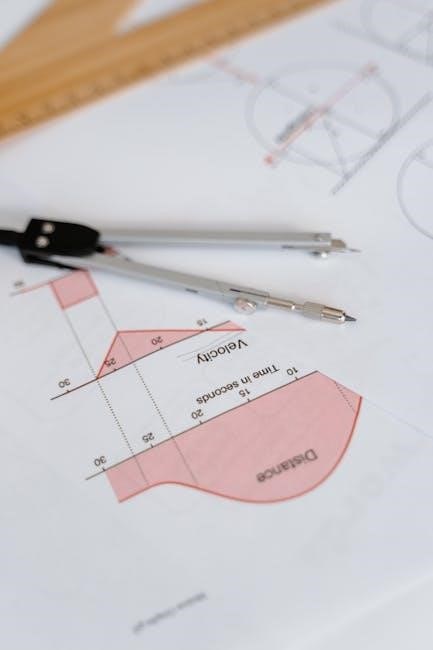
A well-curated PDF resource will often categorize problems by the core strategy required for their solution. This categorization helps you build a mental toolkit of approaches. For instance, you might identify a cluster of problems best solved using the pigeonhole principle or dynamic programming.
Ultimately, identifying these strategies transforms you from a reactive problem-solver to a proactive one, capable of selecting the optimal approach from the outset.
Recent Advances in AI Solving Olympiad Problems
AI, like Google DeepMind’s AlphaGeometry, now solves IMO problems, achieving silver-medal level performance, impacting how we approach math olympiad questions with solutions PDF.
Google DeepMind’s AlphaGeometry
AlphaGeometry, developed by Google DeepMind, represents a significant leap in artificial intelligence capable of tackling complex geometrical problems found in the International Mathematical Olympiad (IMO). This system doesn’t just compute; it reasons geometrically, a crucial skill for success in these competitions.

Its architecture combines a neural network with a symbolic deduction engine, allowing it to both intuitively grasp geometric concepts and rigorously prove theorems. AlphaGeometry successfully solved four out of six problems from a recent IMO, achieving a performance comparable to a silver medalist – a remarkable feat. This breakthrough has implications for accessing and understanding math olympiad questions with solutions PDF, potentially offering new automated assistance in problem-solving and verification. The ability to analyze solutions in PDF format could be greatly enhanced by such AI.
AI Performance Compared to Human Competitors
While AlphaGeometry achieved a silver medal-level performance at the IMO, it’s crucial to understand the nuances of AI versus human problem-solving. Humans often rely on intuition and pattern recognition, skills currently challenging for AI to replicate fully. However, AI excels at exhaustive searches and symbolic manipulation, offering a complementary approach.
Currently, top human competitors still outperform AI consistently on the most challenging problems. Accessing math olympiad questions with solutions PDF allows humans to learn from past strategies, a process AI is beginning to emulate through analyzing vast datasets. The future likely involves a collaborative approach, where AI assists humans in exploring solution spaces and verifying proofs, ultimately enhancing the learning experience derived from these PDF resources.
The Future of AI in Mathematical Problem Solving
The advancements showcased by AlphaGeometry signal a transformative future for AI in mathematics. Expect AI to become an increasingly powerful tool for generating and solving complex problems, potentially leading to new mathematical discoveries. Access to extensive archives of math olympiad questions with solutions PDF will be vital for training these AI models, enabling them to learn and refine their problem-solving abilities.
Future AI systems may personalize learning experiences, providing tailored problem sets and hints based on individual student needs, all sourced from these PDF resources. This could democratize access to high-quality mathematical education. Ultimately, AI won’t replace human mathematicians, but will augment their capabilities, accelerating progress and fostering a deeper understanding of mathematical principles.